
“A coffee bean has a story but roasting decides how loudly that story speaks in the cup.”
Have you ever wondered why two coffees can taste completely different even when they come from similar beans? The answer often begins with coffee roasting. Heat transforms coffee beans for roasting, developing the aroma, sweetness, acidity and body that shape your final cup. Every roast profile brings out something different.
Understanding coffee roasting helps you appreciate why fresh coffee beans, light roast coffee and dark roast coffee offer such different experiences. Roast temperature, timing and development influence the final character of the beans. For aspiring baristas, this knowledge makes it easier to understand flavor, choose suitable coffee and brew with greater confidence.
What Is Coffee Roasting?
Coffee roasting is the controlled heating of green coffee beans for roasting to develop their color, aroma, flavor and texture. During the process, beans lose moisture, expand, darken and undergo chemical changes that create their distinctive taste and aroma.
A skilled coffee bean roaster carefully controls heat, airflow and roasting time to bring out the desired character of each coffee.
What Is the Coffee Roasting Process?
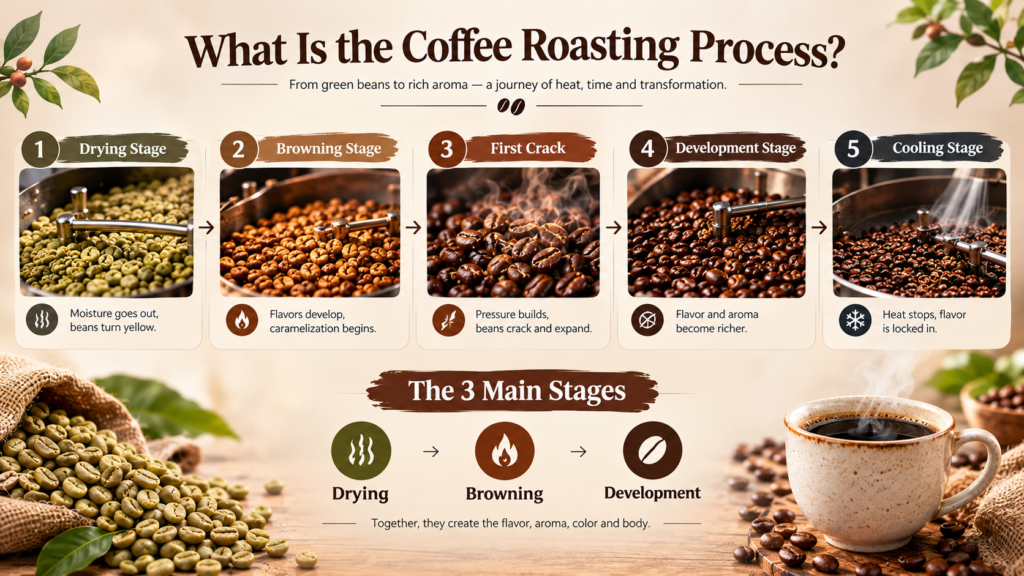
The coffee roasting process step by step involves controlled changes in heat, moisture, color and aroma. Each stage plays a role in developing the final flavor of the coffee.
1. Drying Stage
- Green beans contain natural moisture.
- Heat gradually removes this moisture.
- The beans change from green to yellow.
- Their aroma begins to develop.
2. Browning Stage
- The beans start turning brown.
- The Maillard reaction creates complex flavors.
- Caramelization adds sweetness and depth.
- Aroma becomes more noticeable.
3. First Crack
- Pressure builds inside the beans.
- The beans begin to crack and expand.
- This is known as the first crack.
- It signals an important stage of coffee roasting.
4. Development Stage
- The roaster carefully controls heat and time.
- Flavor and aroma become more developed.
- Too little development can taste sharp.
- Too much can create harsh or smoky notes.
5. Cooling Stage
- The beans are removed from the heat.
- Rapid cooling stops further coffee roasting.
- This helps preserve the intended roast profile.
What Are the Three Main Stages of Roasting?
The three main stages are drying, browning and development. Together, they transform green beans into roasted coffee with its distinctive flavor, aroma, color and body.
Even small changes in heat and timing can make a noticeable difference in the final cup.
How Does Coffee Roasting Affect Flavor and Aroma?
Coffee roasting transforms the bean’s natural compounds, creating the flavors and aromas we enjoy in every cup.
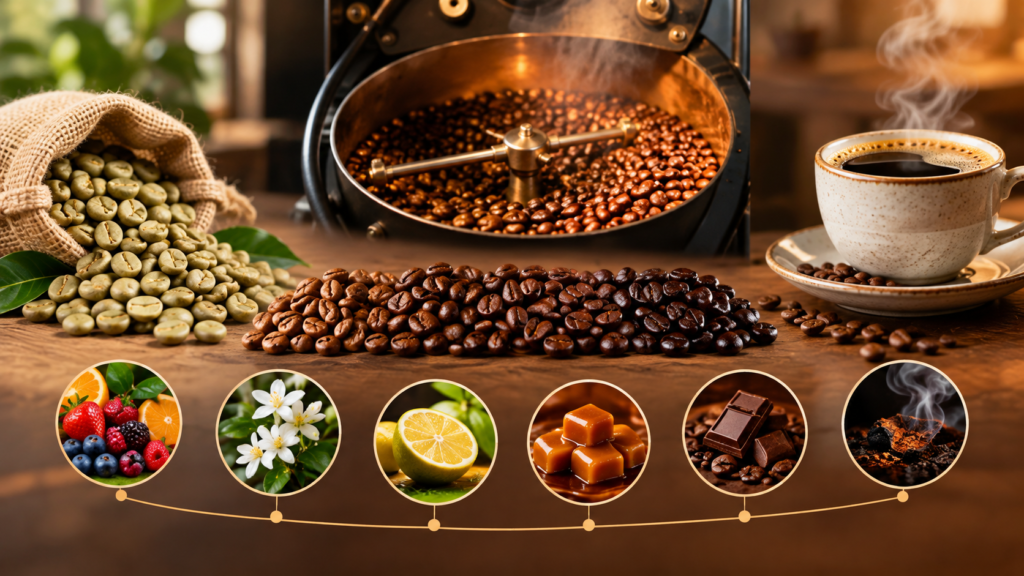
- Flavor: Light roasts often have fruity or floral notes, while darker roasts develop richer, roasted flavors.
- Aroma: Heat creates aromatic compounds that give coffee its distinctive smell.
- Acidity: Lighter roasts often retain brighter, more noticeable acidity.
- Sweetness: Roasting reactions help develop caramel-like and sweet notes.
- Body: Darker roasts often feel fuller and heavier in the mouth.
- Bitterness: Longer or darker roasting can produce more bitter, smoky flavors.
The right roast profile balances these characteristics to bring out the best in each coffee bean.
What are the 4 Types of Coffee Roast?
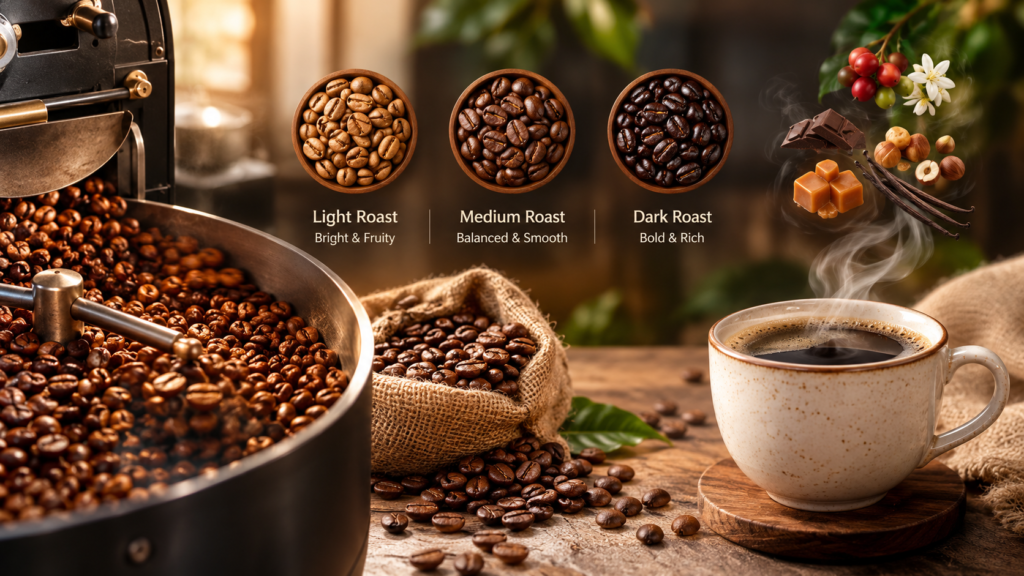
Coffee roasting creates distinct flavor profiles by changing the beans’ acidity, sweetness, body and aroma. The four common roast levels help you choose a coffee that matches your taste preferences.
This comparison helps you understand how different roast levels influence the taste of your cup.
| Roast Level | Typical Flavor | Body | Acidity |
| Light roast coffee | Fruity, floral, citrus | Light | Bright |
| Medium roast coffee | Sweet, nutty, balanced | Medium | Moderate |
| Medium-dark roast | Caramel, chocolate, rich | Fuller | Less pronounced |
| Dark roast coffee | Smoky, bold, bittersweet | Full | Usually less pronounced |
Note: Blonde roast coffee generally refers to a very light roast with a delicate flavor and bright acidity, although its exact meaning can vary by brand.
Understanding these differences helps coffee lovers select the right roast and appreciate how coffee roasting shapes every cup.
How to Roast Coffee Beans
Learning how to roast coffee beans involves controlling heat, timing and roast development to achieve the desired flavor and aroma.
- Select quality green coffee beans.
- Preheat the roasting machine.
- Add the beans and monitor temperature.
- Observe color changes and listen for the first crack.
- Stop roasting at the desired level.
- Cool the beans quickly and store them properly.
Coffee Roasting Process Flow Chart
The coffee roasting process flow chart below summarizes the journey from green beans to roasted coffee.
Select Green Coffee Beans
|
Preheat Roasting Machine
|
Drying Stage
|
Browning Stage
|
First Crack and Development
|
Rapid Cooling
|
Storage and Brewing
The exact temperature and timing depend on the bean type, roasting equipment and intended roast profile.
Why Are Fresh Coffee Beans Important?
Fresh coffee beans retain aromatic compounds that gradually change after roasting. Exposure to air, moisture, heat and light can reduce their desirable flavors.
To preserve quality:
- Store whole beans in an airtight container.
- Keep them away from heat and direct sunlight.
- Grind just before brewing.
- Allow freshly roasted beans time to release gases before brewing.
Freshness depends on proper storage and resting time, not just the roasting date.
How Does Roast Level Affect Brewing?
Different roast levels respond differently during extraction, so baristas may need to adjust their brewing methods.
- Light roast coffee: May benefit from finer grinding, hotter water or longer extraction.
- Medium roast coffee: Often provides a balanced starting point for adjusting grind size and water temperature.
- Dark roast coffee: Usually extracts more readily, so a coarser grind or cooler water may help control bitterness.
These are starting points rather than fixed rules. The best adjustments depend on the beans, brewing method and desired taste.
Ready to Take Your Coffee Skills to the Next Level?
Turn your passion for coffee into practical skills with professional barista training. Learn brewing techniques, understand coffee flavors and build confidence in preparing quality coffee. Explore the training opportunities at CJ Barista Academy and take the next step toward your coffee career.
Contact Information
CJ Barista Academy
Address: SCO 369, second floor sector 44D Chandigarh
Phone: 9056774699, 9056774700
Email: info@cjbaristaacademy.com
Final Thoughts
Coffee roasting shapes the flavor, aroma, acidity and body of every cup. From light roast coffee with bright, delicate notes to dark roast coffee beans with bold, smoky flavors, each roast offers a unique experience. Understanding roast levels and freshness helps you make better brewing decisions.
For aspiring baristas, learning about roasting builds a stronger foundation in coffee preparation. It helps you understand how beans develop their character and how roasting influences the final brew. CJ Barista Academy supports learners through professional barista training, brewing techniques and hands-on coffee education.
“That journey—from green bean to roasted bean to carefully prepared cup—is what makes coffee more than just a beverage.”
FAQs – How Coffee Roasting Affects Flavor and Aroma
Q1. What is the coffee roasting process?
Ans. The coffee roasting process involves heating green coffee beans through drying, browning, development and cooling to create their characteristic flavor, color and aroma.
Q2. What are the steps in roasting coffee?
Ans. The main steps include selecting coffee beans for roasting, preheating the roaster, heating the beans, monitoring the first crack, developing the desired roast and cooling the beans.
Q3. Can you roast coffee beans at home?
Ans. Yes, you can learn how to roast coffee beans at home using a stovetop pan, oven, popcorn popper or home roasting machine. Proper ventilation and temperature control are essential.
Q4. What is a coffee roasting machine?
Ans. A coffee roasting machine heats green coffee beans under controlled conditions. It helps manage temperature, airflow and roasting time to develop consistent flavor and aroma.
Q5. What is a light roast coffee?
Ans. Light roast coffee is roasted for less development than darker roasts. It typically has bright acidity, a lighter body and fruity or floral notes that highlight the coffee’s natural characteristics.